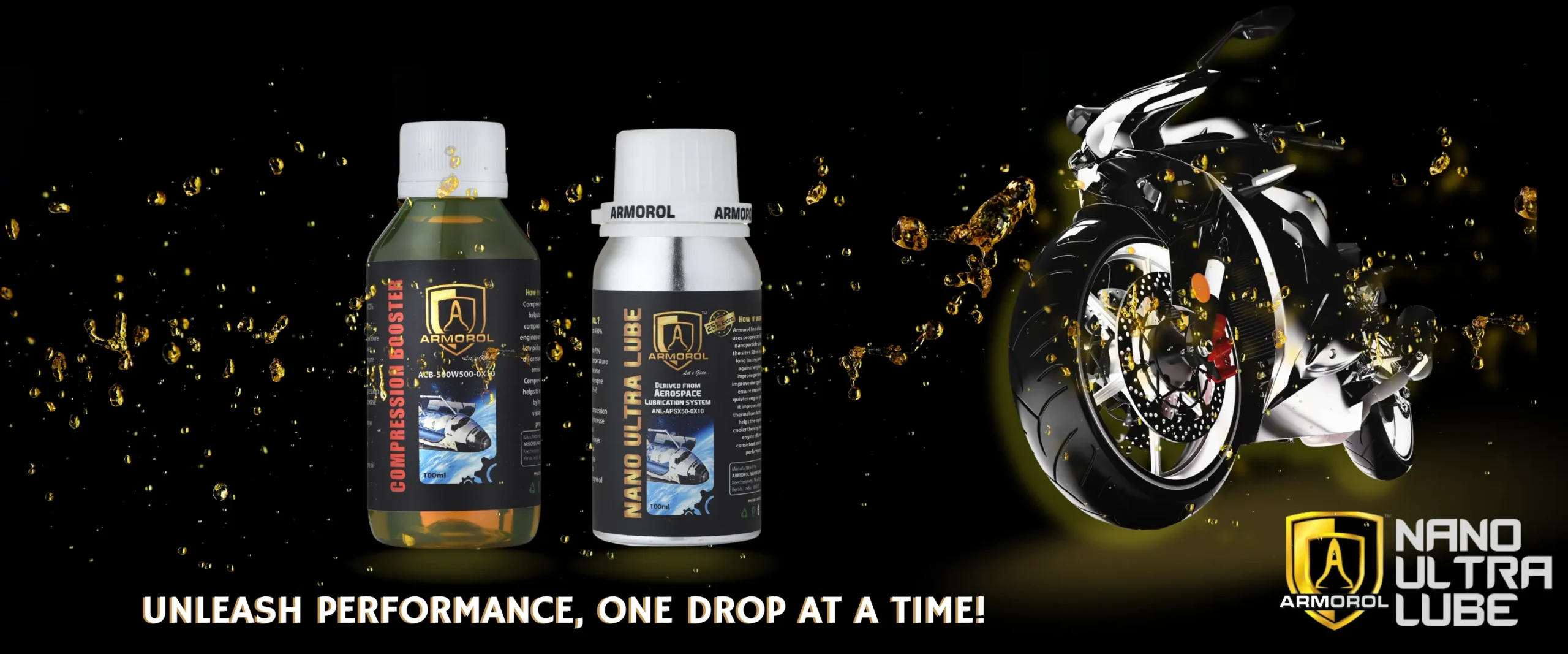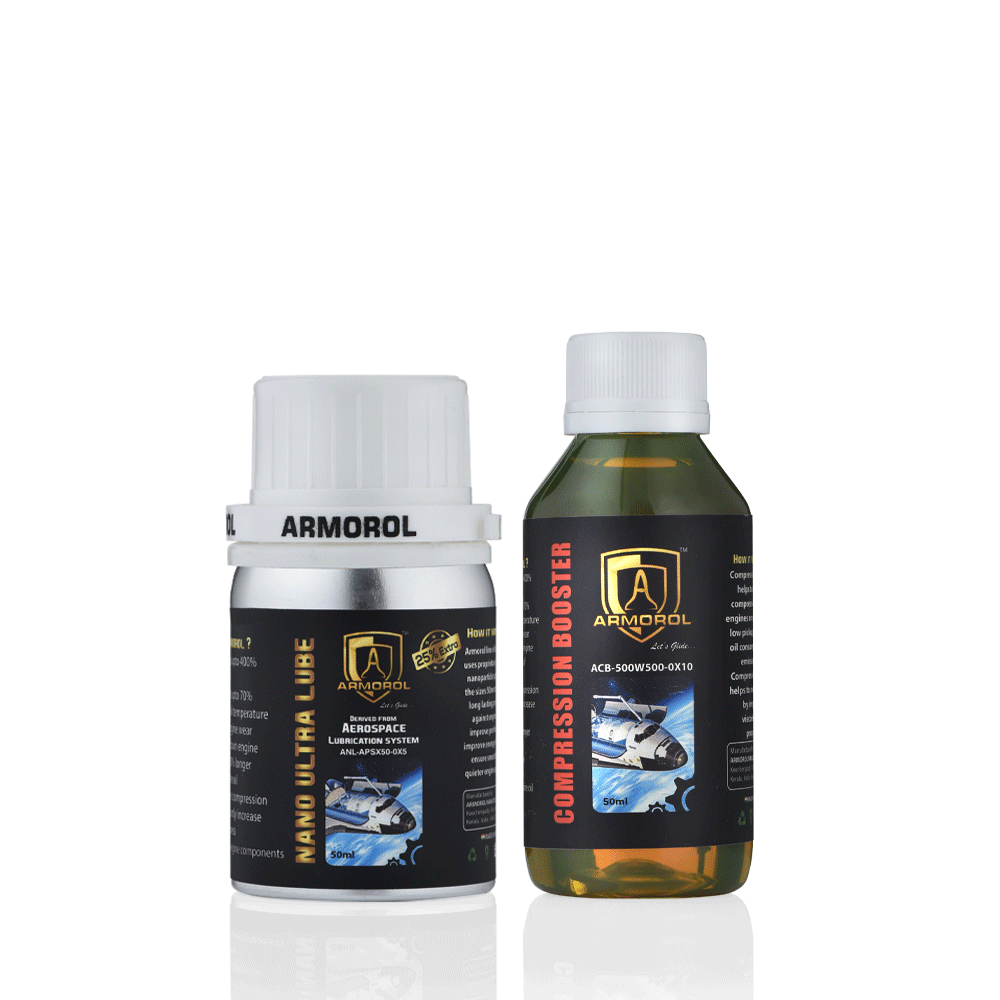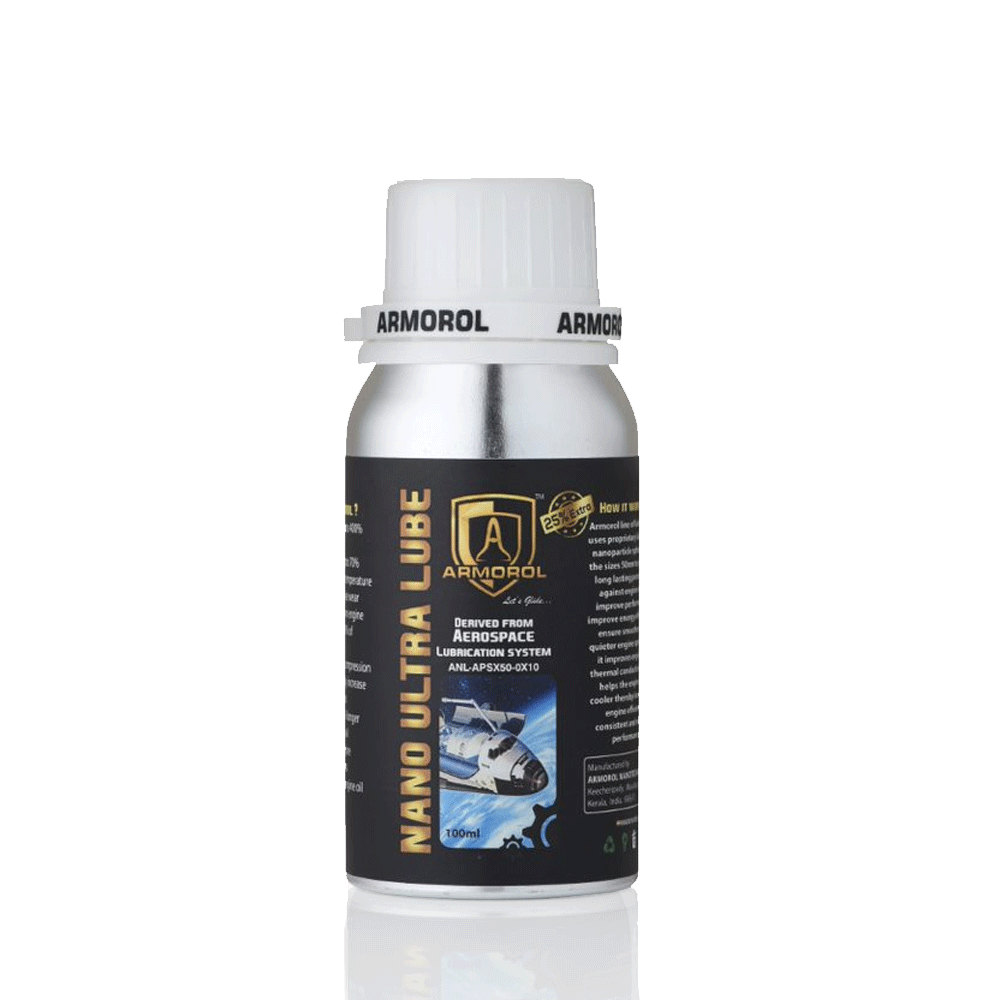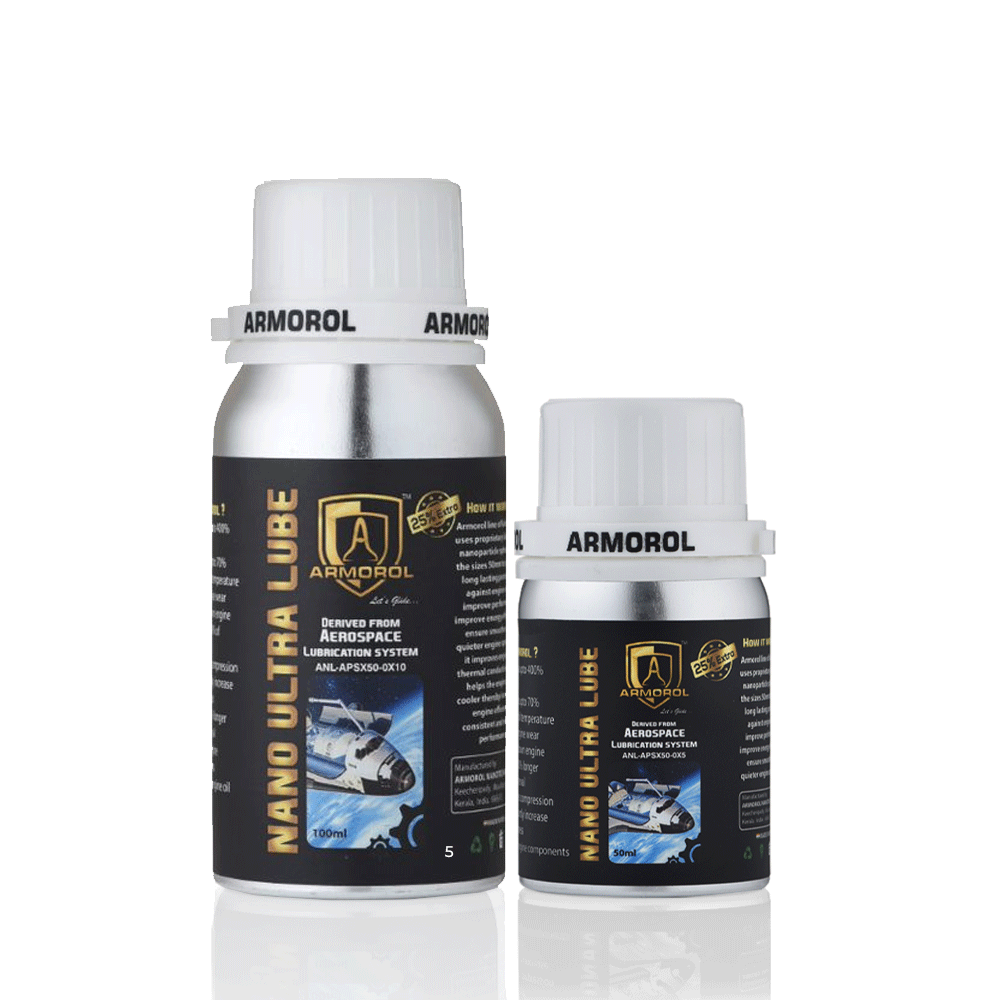

Nano Ultra Lube

Nano Engine Oil Additive to Improve Vehicle Performance & Engine Life

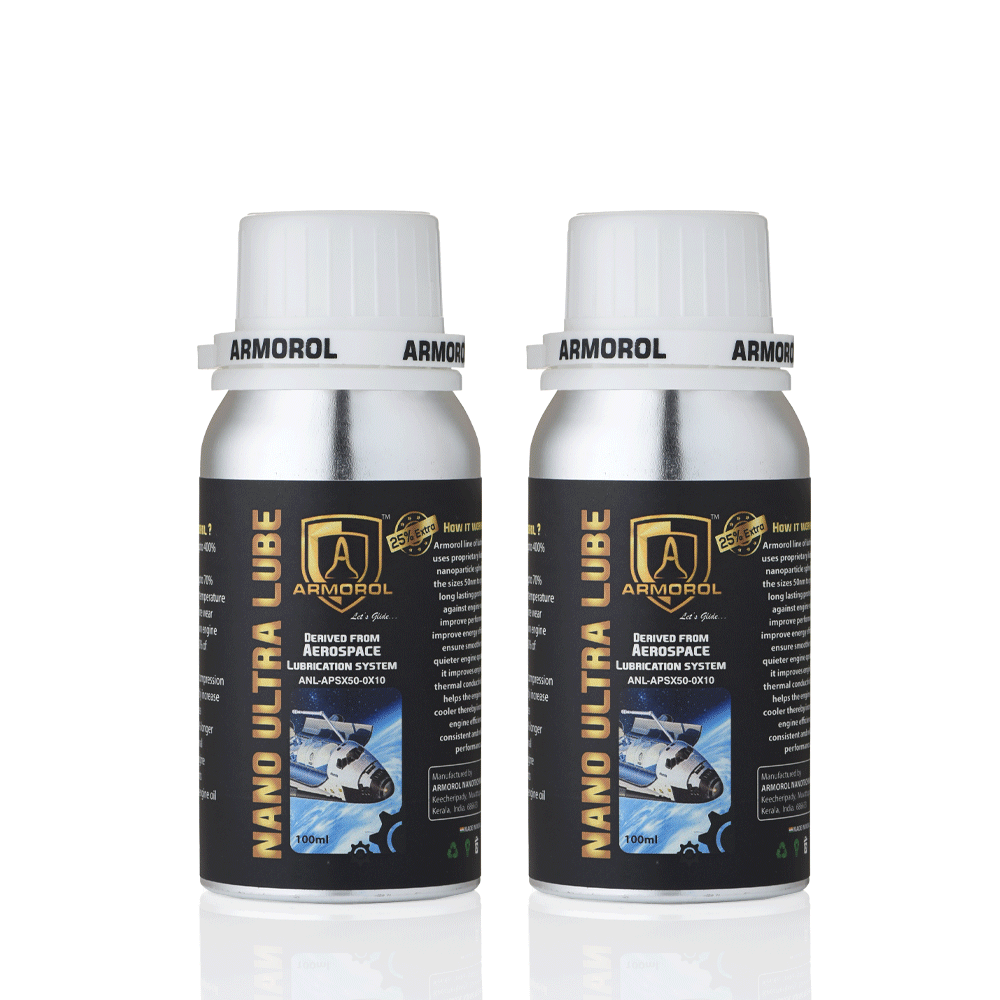
Armorol Nano Ultra Lube is a high-quality Nano Engine Oil Additive made to improve engine performance in cars and bikes. It helps reduce friction, increase mileage, lower engine noise and extend engine life. When added to regular engine oil, it improves lubrication, protects engine parts and ensures smoother performance in all driving conditions.

Quality Guarantee

Best Quality Products

All India Free Delivery

Door Step Delivery

Customer Support

Usage Assistance

Secured Payments

UPI, Credit-Debit Cards, Net Banking
For Cars

For Bikes

Featured Products

About Us

Know About Us More

Armorol Nano Ultra Lube is the invention of Mr.Firoz Mustafa, an IT engineer and car enthusiast from Kerala. The events behind this started in 2012. Despite using the best lubricants available on the market, two of Mr.Firoz’s vehicles began to experience maintenance failures. Curious to know what was happening to the vehicles, he bought different brands of lubricants and used them in the vehicles, then began taking the engines apart each time to study their wear and tear. After a series of experiments, Mr.Firoz realized one thing. Even the lubricants available on the market cannot provide good protection for engines under all driving conditions!

What Is Armorol Nano Ultra Lube?

Armorol Nano Ultra Lube is a high-performance Nano Engine Oil Additive

  • Formulated with advanced nano-particle technology
  • Creates a durable protective layer on engine components
  • Reduces metal-to-metal contact
  • Lowers engine heat and wear
  • Improves overall engine efficiency
  • Enhances long-term engine protection

How Does Armorol Nano Technology Work?

How does Armorol Nano Ultra Lube
reduce engine friction and heat?

Improves overall engine performance and throttle response
Helps increase fuel mileage and efficiency
Reduces engine noise and vibration for smoother operation
Protects internal engine parts from wear and tear
Supports long-term engine reliability and durability

the best additive ever

Let Customer Speak For Us

funfacts-icon-1.png
0 +

Happy Customers

funfacts-icon-2.png
0 +

Authorized Service Centers

funfacts-icon-3.png
0 M +

Money Saved

funfacts-icon-4.png
0 +

Awards

Our Achivements

Armorol Nano lube has achieved an Advanced level rating on the prestigious Amazon Marketplace, showcasing its exceptional performance

Amazon Advanced Level

Receiving Best Performance Award (2020-21) From MLA Manjalamkuzhi Ali

Best Performance
Frequently Asked Questions

Frequently Asked Questions

What chemical is used in Nano lube?

The exact chemical formula of Nano Lube cannot be disclosed due to our policy to ensure business continuity

What properties do Nanoparticles have?

Nano lube belongs to oleophilic chalcogenide nanoparticles with a lamellar crystal structure and possesses spherical morphology

What is the size of nanoparticles?

The size of nanoparticles is carefully distributed from 2nm (quantum dots) to 50nm, with the majority of nanoparticles having an average particle diameter of 50nm (from batch 53 onwards)

What is a chalcogenide?

Tungsten disulfide, molybdenum disulfide, and molybdenum selenide etc… All belong to the chalcogenide family

Do nanoparticles have any long-term damaging effect on metal due to rolling action in nano scale?

To know whether the particles are hard or abrasive, it is softer than graphite and teflon, which is why we can evidently see the performance in the tests exhibiting a concept known as ultra-lubricity (above the super-lubricity concept)

Is Armorol Nano Ultra Lube compatible with diesel particulate filters (DPF), exhaust aftertreatment systems, advanced catalytic converters, and exhaust gas recirculation (EGR) systems?

Yes. Armorol Nano Ultra Lube is fully compatible with diesel particulate filters (DPF), modern exhaust aftertreatment systems, advanced catalytic converters and exhaust gas recirculation (EGR) systems. Its formulation is designed to protect engine components while maintaining the efficiency and durability of emission-control technologies.

If it's soft, will it retain spherical morphology under pressure?

No, it will get squeezed into nano surface asperities under high pressure and form a coating on long-term usage and increase the surface area of the contacting metal surface, thus greatly improving anti-wear and load-carrying properties at the nano scale.

Why is high-point load applied in engine oil testing?

High-point load testing helps evaluate lubricant performance under boundary, severe boundary and extreme pressure lubrication.

Why isn’t aluminum used in the test setup?

The test materials replicate real engine components such as steel crank journals, bearings, and piston rings.

What real engine conditions do these tests simulate?

The tests simulate new engine honing marks, mixed lubrication, oil starvation and high-load contact.

If you compare a 5w-40 and a 10w-40 from the same brand and within the same series. The 10w-40 will have a thicker oil film at 100°c. And will be more protective, right? If not, why?

Higher viscosity demands more anti-wear additives; in short, just because higher viscosity oil molecules are larger than nanoparticles. Very simple.

When you were demonstrating the Mobil Super. You didn't apply oil to both metal surfaces...

Application of lubricant on both surfaces is not mandatory; however, it was done to convince viewers.

In the Nano lube demonstration test: The "shell oil without Nano lube" test...

This is a purposefully designed test to show the superiority of Shell over Mobil 1.

How does Nano Ultra Lube help reduce emissions and soot formation?

Nano Ultra Lube uses a proprietary ashless formulation combined with ultra-low friction technology.

The exact chemical formula of Nano Lube cannot be disclosed due to our policy to ensure business continuity

Nano lube belongs to oleophillic chalcogenide nanoparticles with lamellar crystal structure and possess spherical morphology

Size of nano particles is a careful distribution of nano particles from 2nm (quantum dots) to 50nm with majority of nano particles having average particle diameter of 50nm (from batch 53 onwards)

Tungsten disulfide, molybdenum disulphide & molybdenum selenide etc… All belong to chalcogenide family

To know whether the particles are hard or abrasive, it is softer than graphite and teflon which is why we can evidently see the performance in the tests exhibiting a concept known as ultra lubricity (above super lubricity concept)

Yes. Armorol Nano Ultra Lube is fully compatible with diesel particulate filters (DPF), modern exhaust aftertreatment systems, advanced catalytic converters, and exhaust gas recirculation (EGR) systems. Its formulation is designed to protect engine components while maintaining the efficiency and durability of emission-control technologies.

No, it will get squeezed into nano surface asperities under high pressure and form a coating on longterm usage and increase surface area of contacting metal surface thus greatly improving anti wear and load carrying properties at nano scale, which is the main reason for miraculous performance as compared to other commercial nano ultra lube

The whole point of testing is to test extreme conditions inside the engine.
These types of conditions only happen during loss of oil pressure, racing conditions, oil scarcity, sudden throttle blip under load etc…
Regarding selection of bearing race, it is metallurgically atleast 10 times more harder than the ball being tested and yes it is still made of bearing steel and perfectly simulate, aluminium piston vs steel, softer ring vs steel, actual bearings inside engine, crank journal bearings etc…
If you pay extra attention to detail, conditions for the test were kept exactly the same so that it would bring up lubricant’s quality.
The whole point of testing with the same rough bearing race is to simulate what engine oil does to a new engine whose bore has scratches from honing marks either from factory or from lathe.
The tests done were carefully engineered tests keeping in mind about various aspects of lubrication like hydrodynamic, boundary, mixed, severe boundary and extreme pressure lubrication scenarios. Although these aspects were not talked about in detail in video, target audiences are common people.


Higher viscosity demands more anti wear additives in short just because higher viscosity oil molecules are larger than nanoparticles
Very simple

Application of lubricant on both surfaces is not mandatory however it was done to convince viewers however it was missed by mistake in case of mobil 1, however in the video of “truth about engine oil” where mobil 1 was applied on both sides and results were still much worse

This is a purposefully designed test to show superiority of shell over mobil 1. If the tests were inverted the result would indicate how much worse mobil 1 would really be which is not our intention. Also it proves a point that if Nano lube was applied once in any engine and if the shell is continued without Nano lube by any chance it would still be safer for a while because Nanoparticles would still protect the engine from wear. However the other anti friction and heat reduction qualities of Nano lube would be lost.

Nano Ultra Lube uses a proprietary ashless formulation combined with ultra-low friction technology. By reducing friction and minimizing blow-by, it promotes more efficient combustion. This results in lower emission gases and reduced soot formation, helping engines run cleaner while supporting modern emission-control systems.

Buy Now From Amazon

India's Most Trusted Online E-Commerce Platform

Buy Now From Flipkart

India's favourite online shopping destination!

Shopping Cart